1inch DEX Aggregator: Routing Mechanics and Integration Trade-Offs
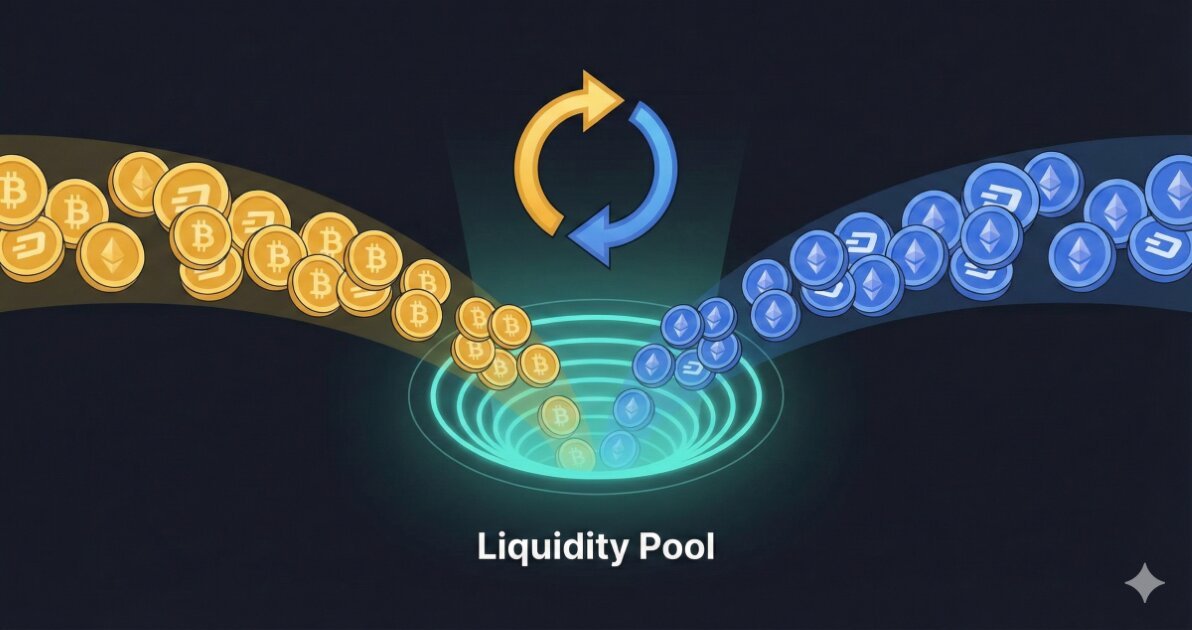
1inch is a decentralized exchange aggregator that routes user trades across multiple liquidity sources to optimize price execution. Unlike a single automated market maker, 1inch’s Pathfinder algorithm splits orders across protocols like Uniswap, Curve, Balancer, and others to minimize slippage and gas costs. This article examines the routing logic, integration surface, and practical considerations for developers and traders working with the protocol.
How Pathfinder Routes Trades
Pathfinder evaluates swap opportunities across all connected liquidity sources, modeling the trade as a graph search problem. Each pool or AMM represents a node, and the algorithm calculates expected output after fees and slippage for every viable path. For complex routes, it may split a single order across multiple protocols in a single transaction.
The algorithm weighs three variables: expected token output, gas cost, and route complexity. A simple direct swap on Uniswap V3 may cost 120,000 gas, while a four hop route across Curve, Balancer, and SushiSwap might cost 450,000 gas but yield 0.8% more tokens. Pathfinder selects the route with the highest net output after subtracting estimated gas fees at current network conditions.
Route discovery happens offchain. The 1inch API performs the pathfinding computation and returns a populated transaction payload. Users then submit this transaction onchain via the 1inch router contract, which executes the swaps atomically. If any leg of a split route fails, the entire transaction reverts.
Router Contract Architecture
The 1inch router is a proxy contract that delegates calls to liquidity source adapters. Each adapter implements the specific swap logic for a protocol (e.g., calling swapExactTokensForTokens on Uniswap or exchange on Curve). The router enforces minimum output requirements: if the final token balance falls below the user’s specified minimum, the transaction reverts.
Key security feature: the router never holds user funds between transactions. Tokens are transferred from the user’s wallet at the start of execution and routed directly through each swap. The router has no admin keys that can drain user allowances.
The contract accepts a data parameter containing encoded swap instructions. This parameter includes the sequence of protocols, pool addresses, and expected amounts for each hop. Because this data is generated offchain, users must trust the API to construct valid and optimal routes. Malicious or outdated API responses could route through unfavorable pools, though the minimum output check provides a floor.
Gas Optimization and MEV Exposure
Complex routes consume more gas. A swap touching five protocols might cost 600,000 to 800,000 gas, making it economical only for larger trades. For orders under $1,000 equivalent, direct swaps on a single AMM often outperform aggregated routes after gas costs.
1inch transactions are visible in the mempool before confirmation, exposing them to frontrunning and sandwich attacks. Because the router enforces a minimum output rather than a fixed price, attackers can manipulate pool prices within the slippage tolerance window. Setting tighter slippage (e.g., 0.3% instead of 1%) reduces MEV vulnerability but increases revert risk during volatile periods.
The protocol offers a private RPC option that routes transactions through Flashbots or Eden Network to mitigate frontrunning. This adds latency but removes mempool visibility for traders executing larger swaps.
Integration Modes: API vs Smart Contract
Developers can integrate 1inch at two levels. The API integration involves calling the 1inch quote endpoint, receiving a transaction payload, and broadcasting it from the user’s wallet. This approach is stateless and requires no onchain deployment, but introduces API dependency and centralization risk. If the API is down or censors certain routes, integrators have no fallback.
Smart contract integration involves calling the 1inch router directly from another contract. This works for automated strategies or vaults that need to rebalance holdings. The integrating contract must approve the router to spend tokens, then call swap with the precomputed route data. Because route discovery still happens offchain (via the API), this pattern does not eliminate the API dependency.
Some protocols use 1inch for DAO treasury rebalancing or automated yield strategies. The DAO contract can specify a maximum slippage parameter and execute swaps based on external price oracles. However, the contract still relies on an external actor to fetch route data and submit the transaction, introducing a trusted role.
Worked Example: Routing a 50 ETH to USDC Swap
A user wants to swap 50 ETH for USDC on Ethereum mainnet. They query the 1inch API with the token pair, amount, and acceptable slippage of 0.5%.
Pathfinder evaluates the following options:
– Direct swap on Uniswap V3 (0.05% fee tier): outputs 167,200 USDC, 130,000 gas
– Direct swap on Curve: outputs 167,450 USDC, 180,000 gas
– Split route: 30 ETH via Uniswap V3, 20 ETH via Curve: outputs 167,520 USDC, 290,000 gas
Assuming gas price of 30 gwei and ETH at $3,340, the gas costs are:
– Uniswap only: 130,000 × 30 × 10^-9 × 3,340 = $13
– Curve only: 180,000 × 30 × 10^-9 × 3,340 = $18
– Split route: 290,000 × 30 × 10^-9 × 3,340 = $29
Net outputs after gas:
– Uniswap: 167,200 – 13 = 167,187 USDC
– Curve: 167,450 – 18 = 167,432 USDC
– Split: 167,520 – 29 = 167,491 USDC
The API returns the split route. The user submits the transaction with a minimum output of 166,654 USDC (0.5% slippage tolerance). The router executes both swaps atomically. If either leg yields less than expected due to pool state changes between API query and execution, the transaction may still succeed as long as total output exceeds the minimum.
Common Mistakes and Misconfigurations
- Stale route data: Using API responses older than 10 seconds. Pool reserves shift constantly, and outdated routes may revert or execute at worse prices than the quoted amount.
- Ignoring gas price volatility: Fetching a route when gas is 20 gwei, then submitting when gas spikes to 80 gwei. The route remains valid but gas costs can eliminate any aggregation benefit.
- Unlimited token approvals: Approving the router for
type(uint256).maxon tokens you rarely trade. While convenient, this creates persistent allowance risk if the router or an adapter is exploited. - Tight slippage on illiquid pairs: Setting 0.1% slippage on a token with 2% bid/ask spread. The transaction will revert unless you accept wider tolerance or split into smaller trades.
- Assuming routes are deterministic: The same input parameters can return different routes minutes apart as liquidity shifts. Do not cache route data across sessions.
- Overlooking token tax mechanics: Some tokens charge transfer fees or have dynamic taxes. The router cannot predict these, and the final output may fall below minimum if the token contract deducts fees mid-route.
What to Verify Before You Rely on This
- Current gas price and network congestion. Route profitability depends on execution cost.
- Router contract address for the chain you are using. 1inch deploys separate routers per network.
- Token approval status and whether you are comfortable with the approval amount.
- Slippage tolerance setting matches your risk preference and the token’s liquidity profile.
- API endpoint availability and whether you have fallback routing logic if the service is unreachable.
- Whether the token you are swapping has transfer restrictions, fees, or blacklist mechanics that could interfere with routing.
- The list of liquidity sources currently supported on your target chain. Coverage varies across networks.
- MEV protection status if you are executing a large swap. Confirm whether you are using public mempool or a private relay.
- Version of the router contract and any known issues or upcoming migrations.
- Rate limit policies on the API if you are integrating programmatically at high frequency.
Next Steps
- Test a small swap on the target chain to confirm gas costs and routing behavior with live liquidity conditions.
- Implement slippage and gas price checks in your integration to abort or adjust parameters when conditions are unfavorable.
- Monitor router contract events and changelog for upgrades or adapter changes that could affect your integration.
Category: Crypto Exchanges