Evaluating and Filtering Crypto News Flows for Technical Signal
Crypto news operates at higher velocity and lower signal than most financial media. Practitioners need frameworks to extract actionable intelligence from announcement streams, protocol updates, and market events without wasting cycles on noise or trading on stale information embedded in narrative packaging.
This article covers how to evaluate news sources for technical relevance, distinguish breaking protocol changes from narrative repackaging, and build filters that surface events with measurable onchain or market impact.
Source Classification and Update Latency
Crypto news flows fall into distinct tiers based on origin and verification status.
Primary sources include protocol GitHub commits, governance proposal queues, official project Discord or forum announcements, and onchain event logs. These carry the lowest latency and highest signal for technical changes. A governance proposal to alter collateral ratios in a lending protocol appears in the snapshot or Tally interface before any media outlet reports it. Monitoring these feeds directly removes at least one propagation delay.
Aggregator and curated feeds compile announcements from multiple protocols or filter by topic. Quality varies. Feeds that link to primary sources and timestamp original publication let you verify freshness. Feeds that rewrite announcements without attribution introduce error and lag.
General crypto news sites publish mixture of reporting, opinion, and sponsored content. Their value lies in synthesis and context, not breaking technical updates. Treat these as secondary confirmation or background rather than actionable signal.
Social media and influencer channels exhibit the widest variance. A core developer tweeting a vulnerability disclosure may be your fastest alert. An influencer repackaging week old bridge statistics as breaking news wastes attention.
Assign each source a typical latency. If you learn about a major protocol upgrade from a newsletter 48 hours after the governance vote closed, that source does not belong in your breaking update tier.
Distinguishing Protocol Changes from Market Narrative
Not all news affects systems the same way. Protocol changes alter contract behavior, fee structures, supported assets, or security assumptions. Market narrative repackages price movement, sentiment, or speculation without changing how software executes.
A hard fork that modifies consensus rules is a protocol change. A news article explaining why traders might interpret that fork as bullish is narrative. The fork requires you to verify node compatibility and update infrastructure. The narrative does not.
Examples of actionable protocol changes include new token listings on a DEX (affects available pairs and liquidity routing), collateral ratio adjustments in a lending market (changes liquidation risk), gas limit increases in an L2 (affects transaction batching and costs), and oracle feed additions or removals (alters price data dependencies).
Examples of narrative packaging include analyst predictions based on chart patterns, interviews with executives about future intentions, explanations of why a token might outperform based on sector rotation theories, and summaries of social media sentiment shifts.
Narrative can move prices. It does not change what your contracts can do or how your funds are secured. Filter accordingly based on whether you are trading sentiment or operating infrastructure.
Parsing Governance Announcements for Execution Risk
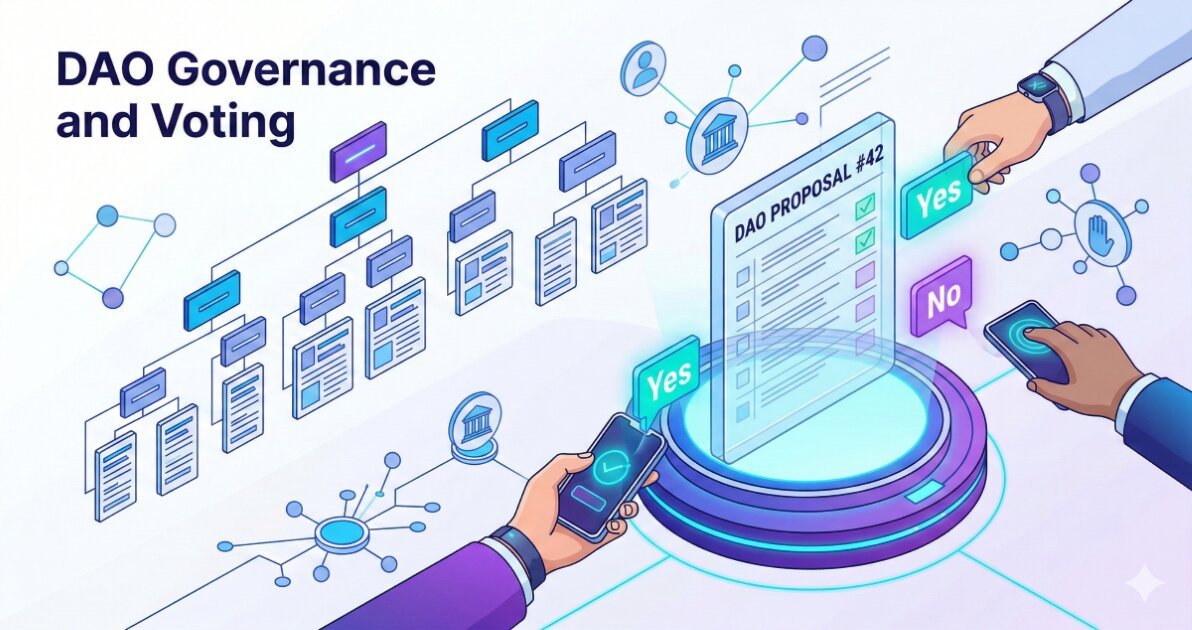
Governance proposals generate frequent news items but vary widely in implementation certainty. A proposal under discussion has different status than one queued for execution after a successful vote.
Check the proposal state. Proposals in draft or temperature check phases often appear in news feeds but may never execute. Proposals that passed voting and entered the timelock queue will execute unless an emergency action intervenes. The timelock duration (commonly 24 to 72 hours for major protocols) gives you a window to prepare.
Identify what the proposal changes. Proposals that modify economic parameters (fees, reward rates, collateral factors) affect yield calculations and risk models immediately upon execution. Proposals that authorize future contracts or spending do not change existing system behavior until those contracts deploy.
Note the execution block or timestamp. Some governance systems use block numbers rather than timestamps for scheduling. Convert these to expected clock time using average block time for the relevant chain, but account for variance. Ethereum block times fluctuate; a proposal scheduled for block N might execute an hour earlier or later than the naive calculation suggests.
Onchain Event Monitoring vs. News Alerts
Onchain events provide ground truth for certain categories of news. Large transfers, contract deployments, governance executions, and oracle price updates all emit events that you can monitor directly without intermediary reporting.
Setting up event listeners for critical contracts (your own positions, protocols you depend on, major liquidity pools) gives you notice of state changes within blocks. A large withdrawal from a liquidity pool affects your trade execution before any news site reports it. A governance proposal execution changes contract parameters at a specific block, regardless of when articles publish.
News alerts remain useful for events that do not emit convenient onchain signals, including off chain governance decisions, regulatory announcements, partnership agreements, and security disclosures from audit firms. Combine both: monitor onchain for state changes, use curated news for context and off chain developments.
Worked Example: Filtering a Collateral Update Announcement
You see a headline: “Major DeFi Protocol Raises USDC Collateral Factor to 85%.”
First, verify the source. Check if the article links to a governance proposal or official announcement. Navigate to the protocol governance interface and locate the proposal by ID or title. Confirm the proposal state: passed and queued, or still in discussion.
Second, extract the technical detail. The collateral factor determines how much you can borrow against USDC deposits. An increase from, say, 80% to 85% means you can borrow $85 against $100 USDC instead of $80. This affects your liquidation buffer. If you currently borrow at 78% utilization with an 80% factor, the new 85% factor gives you more room but does not change your position immediately.
Third, identify the execution timeline. Check the proposal’s timelock expiration. If execution happens in 36 hours, you have that window to adjust positions if needed.
Fourth, assess impact on your operations. If you run liquidation bots, the new factor changes when positions become eligible for liquidation. If you maintain borrow positions, recalculate your health factor after the change executes. If you simply hold assets without borrowing, the announcement may be irrelevant noise.
Fifth, ignore speculation in the article about what this means for token price or user growth. That is narrative layered on top of the technical change.
Common Mistakes and Misconfigurations
-
Treating news publication time as event time. The article timestamp reflects when a journalist wrote the piece, not when the underlying event occurred or will execute. Always trace back to the primary source for actual timing.
-
Reacting to rumors or unverified claims without checking proposal state or transaction history. “Protocol plans to increase fees” is not the same as “Protocol governance queue contains fee increase scheduled for block N.”
-
Ignoring timelock and delay mechanisms. A passed governance vote does not mean immediate execution. Missing the delay window can lead to surprise parameter changes.
-
Failing to distinguish testnets from mainnet in deployment news. A contract deployed to Goerli or Sepolia does not affect mainnet operations. Some news sources do not clearly label the network.
-
Assuming all forks or upgrades require user action. Many protocol upgrades happen transparently if you use hosted interfaces or updated wallet software. Verify what, if anything, you need to do.
-
Over indexing on price predictions embedded in technical update articles. The fact that a protocol ships a new feature does not validate the article’s speculation about resulting token appreciation.
What to Verify Before You Rely on This
-
Source credibility and track record. Has this feed published inaccurate or outdated information before? Do they link to verifiable primary sources?
-
Timestamp and version of information. When was the underlying event announced or executed? Does the article reference current protocol versions or outdated deployments?
-
Governance proposal state and execution schedule. Is the change live, queued, or still under discussion? What block or time does execution occur?
-
Network and contract addresses. Does the news apply to mainnet or a testnet? Are the contract addresses cited correctly and do they match official documentation?
-
Scope of impact. Does this change affect all users, specific asset types, or particular contract interactions? Does it apply to the protocol version you use?
-
Regulatory jurisdiction and applicability. If the news covers a regulatory development, which jurisdictions does it affect? Does it apply to protocols you interact with?
-
Reversal or update status. Has the announced change been delayed, cancelled, or modified since the original publication?
-
Oracle or data provider involved. If the news involves price feeds or external data, which oracle system is referenced and what is its current operational status?
-
Liquidity and market depth context. If the news discusses trading or liquidity events, verify current pool sizes and volumes rather than relying on figures cited in the article.
-
Security audit or review status. If the news announces a new contract or upgrade, has it been audited? Are audit reports published and accessible?
Next Steps
-
Catalog your current news sources and classify each by latency tier (primary, aggregator, general news, social). Adjust monitoring frequency to match tier. Check primary sources hourly or via webhooks, aggregators daily, general news weekly.
-
Set up onchain event monitoring for contracts critical to your operations using tools like Etherscan notifications, Tenderly alerts, or custom subgraph queries. Configure alerts for governance executions, large transfers, and parameter changes.
-
Build a checklist for evaluating governance proposals that appear in news feeds: verify proposal ID, check state and timelock, extract specific parameter changes, calculate impact on your positions, and set a calendar reminder for execution block or time.