Major Crypto Exchanges: Architecture, Custody Models, and Operational Trade-offs
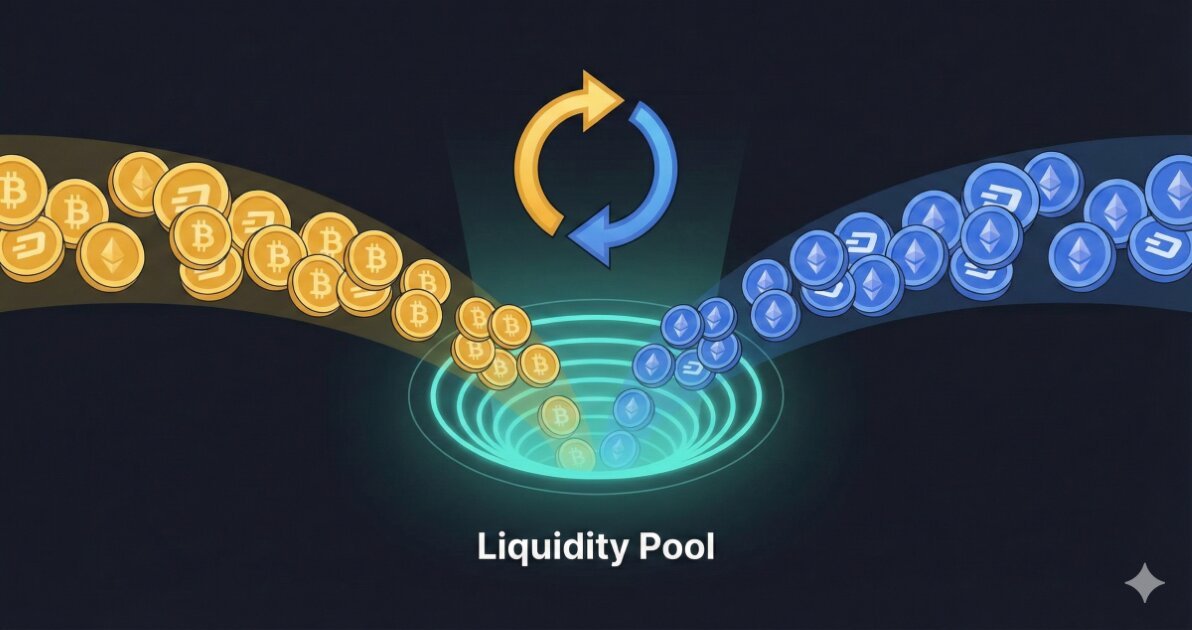
Major centralized exchanges (CEXs) handle the bulk of crypto spot and derivatives volume by aggregating liquidity, managing custody, and operating order matching engines at scale. Understanding their technical architecture, custody and settlement flows, and operational risks lets you choose the right venue for each use case and anticipate failure modes when capital or execution speed matters.
This article examines how large exchanges structure their custody, matching, and settlement layers, the trade-offs between hot and cold wallet allocation, and the mechanics that determine withdrawal latency, slippage on large orders, and recovery paths during outages or insolvency events.
Custody Architecture and Hot/Cold Wallet Allocation
Exchanges partition user funds across hot wallets (connected to the internet for rapid withdrawals), warm wallets (semi-offline with slower signing flows), and cold wallets (air-gapped, require manual intervention). The allocation ratio determines withdrawal speed and attack surface.
A typical allocation might hold 5 to 15 percent of assets in hot wallets, 10 to 25 percent in warm wallets accessible within hours, and the remainder in cold storage. High volume assets (BTC, ETH, stablecoins) often maintain higher hot wallet reserves to service withdrawals without delays. Lower volume tokens may sit entirely in cold storage, requiring manual sweeps that add 12 to 48 hours to withdrawal time.
When a user deposits, funds typically land in a pooled deposit address. The exchange credits the internal ledger balance, then sweeps the onchain funds to warm or cold storage in batches (every few hours or daily, depending on chain fees and deposit volume). Withdrawals draw from the hot wallet first. If the hot wallet balance drops below a threshold, the exchange triggers a warm or cold wallet sweep to refill it, introducing latency.
This layered model creates a liquidity buffer. During rapid outflows (market panic, regulatory news, rumors of insolvency), hot wallets can drain faster than cold wallet sweeps refill them, forcing the exchange to pause withdrawals or implement queues. Monitoring onchain wallet movements and comparing known hot wallet addresses to total claimed reserves helps estimate how much liquidity is immediately accessible.
Order Matching and Settlement Finality
Exchanges operate internal ledgers that update balances in microseconds, decoupled from blockchain settlement. When you place a limit order, the matching engine locks the quoted asset in your account, matches it against the order book, and updates both parties’ ledger balances atomically. No onchain transaction occurs. Settlement finality is instant from the user perspective, but the exchange now owes you the asset rather than you holding it onchain.
This custody and ledger separation enables high throughput (thousands of orders per second) and sub-millisecond latency, but introduces counterparty risk. The exchange is effectively a fractional reserve bank for crypto. If the matching engine credits a trade but the exchange lacks the underlying asset (due to insolvency, mismanagement, or a hack), your ledger balance is an IOU.
Some exchanges publish Merkle tree proofs or zk-SNARK based proofs of reserves, allowing users to verify that the exchange holds at least as much of each asset as the sum of all user balances. These proofs confirm solvency at a snapshot in time but do not guarantee that funds are accessible (assets could be locked in a failed DeFi protocol or seized) or that liabilities (loans, derivatives positions) are accounted for. Treat proofs of reserves as a floor, not a complete picture.
Withdrawal Processing and Batching
Exchanges batch withdrawals to minimize chain fees and manage hot wallet exposure. Instead of broadcasting one transaction per withdrawal request, they aggregate pending withdrawals for the same chain into a single transaction with multiple outputs, processed every few minutes to every few hours.
The batching interval and fee policy determine how quickly your withdrawal confirms onchain. During periods of high chain congestion (e.g., Ethereum gas spikes), some exchanges delay batches or require users to cover elevated fees. Others absorb the cost and extend batching intervals to wait for fee relief. Check the exchange’s fee schedule and historical withdrawal times for the specific chain before assuming instant processing.
Withdrawals also trigger compliance checks (KYC verification, AML screening, velocity limits). First time withdrawals to a new address or large amounts may enter a manual review queue, adding hours or days. Whitelisting withdrawal addresses in advance can reduce this friction.
Liquidity Depth and Slippage on Size
Order book depth varies by asset and exchange. Major pairs (BTC/USDT, ETH/USDT) on tier one exchanges typically maintain sub 0.1 percent slippage for trades up to several hundred thousand dollars, with liquidity concentrated within 10 to 50 basis points of mid price. Smaller pairs or lower tier exchanges may show 1 to 5 percent slippage on orders as small as ten thousand dollars.
Market makers provide this liquidity by placing continuous bid and ask orders, adjusting positions based on inventory risk and hedging in derivatives markets. During high volatility or news events, market makers widen spreads or pull orders entirely, causing order book depth to collapse. A pair that normally absorbs a million dollar market order with 0.2 percent slippage might slip 2 to 5 percent during a flash crash.
Exchanges also use internal risk engines to halt trading or impose position limits when price feeds diverge sharply from other venues (potential oracle manipulation or feed failure). These circuit breakers prevent cascading liquidations but can trap positions during critical moments.
Operational Failure Modes
Exchanges fail in predictable ways. The most common are hot wallet depletion (withdrawal pauses), matching engine outages (trading halts), database corruption (ledger rollbacks), and regulatory seizure (account freezes).
Hot wallet depletion occurs when withdrawal demand exceeds hot wallet reserves and cold wallet sweeps cannot keep pace. The exchange either pauses withdrawals, implements a queue, or processes withdrawals in priority order (largest first, KYC verified first, etc.). Monitoring the exchange’s onchain addresses and comparing outflows to known reserves provides early warning.
Matching engine outages happen when order flow exceeds capacity or a software bug crashes the engine. The exchange halts trading, rolls back recent trades, or switches to a backup engine with stale order book state. Positions may show incorrect P&L during the outage, and open orders may execute at stale prices when the engine resumes.
Database corruption or ledger rollbacks occur when the internal ledger diverges from the matching engine state due to replication lag, software bugs, or hardware failure. The exchange may freeze accounts, roll back trades, or manually reconcile balances. Users with trades executed during the affected window may see balances adjusted retroactively.
Regulatory seizure freezes accounts without warning when authorities serve a warrant or order. Funds may remain inaccessible for months or years pending legal resolution. Jurisdictional diversification (holding funds across exchanges in different legal regimes) and keeping only working capital on exchange reduce exposure.
Worked Example: Withdrawal Path During Congestion
You hold 10 BTC on a major exchange and request a withdrawal to your hardware wallet during a period of elevated onchain fees and market uncertainty.
- The exchange receives your request at 14:00 UTC and adds it to the pending withdrawal queue for Bitcoin.
- The next batching window opens at 14:30. The exchange aggregates your withdrawal with 50 others into a single transaction, targeting 20 sat/vB to confirm within two blocks.
- The transaction draws from the exchange’s primary hot wallet, which holds 150 BTC. After this batch, the hot wallet balance drops to 120 BTC.
- At 15:00, the hot wallet balance crosses the refill threshold (125 BTC). The exchange initiates a cold wallet sweep to move 100 BTC to the hot wallet.
- The cold wallet sweep requires three manual signatures from geographically distributed key holders. The first two sign by 16:00, but the third is unreachable until 18:00.
- At 18:15, the cold wallet transaction broadcasts and confirms at 19:00.
- Meanwhile, additional withdrawal requests have drained the hot wallet to 80 BTC. Your withdrawal is in the queue behind 30 others totaling 60 BTC. The exchange pauses new withdrawals until the cold wallet sweep completes.
- At 19:05, the hot wallet is replenished. Your withdrawal batch, queued since 14:30, finally broadcasts at 19:30 and confirms onchain by 20:00.
Total elapsed time: six hours, due to batching, cold wallet refill latency, and queue backlog.
Common Mistakes and Misconfigurations
- Assuming withdrawal speed matches deposit speed. Deposits credit instantly to your ledger balance. Withdrawals must wait for batching, compliance checks, and hot wallet availability.
- Ignoring order book depth for large trades. Market orders on thinly traded pairs can slip 5 to 10 percent or more. Use limit orders and split large trades across multiple venues.
- Treating proof of reserves as proof of liquidity. Reserves prove the exchange holds assets at a point in time, not that those assets are accessible or unencumbered.
- Holding funds on exchange to save 0.1 percent in trading fees. Custody risk (hacks, insolvency, seizure) often outweighs fee savings for capital not actively traded.
- Using API keys without IP whitelisting or withdrawal restrictions. Compromised keys can drain accounts in minutes. Restrict API permissions to trading only, whitelist IPs, and disable withdrawal capabilities unless explicitly needed.
- Failing to whitelist withdrawal addresses in advance. First time withdrawals to new addresses often trigger manual review, adding hours or days to processing.
What to Verify Before You Rely on This
- Current hot and cold wallet addresses for your chosen exchange, available via onchain explorers or the exchange’s public disclosures.
- Withdrawal batching intervals and fee policies for the specific chains you use, found in the exchange’s support documentation or tested with small transactions.
- Latest proof of reserves publication date and methodology, if the exchange publishes them. Verify the proof independently using provided Merkle roots or zk proof verification tools.
- Regulatory status in your jurisdiction and the exchange’s home jurisdiction, including any pending enforcement actions or license restrictions.
- Historical uptime and incident response times during past outages, available via status pages or third party monitoring services.
- Order book depth at various price levels for your target pairs, observable in real time via the exchange’s API or aggregator tools.
- Current KYC and AML requirements, including withdrawal limits for different verification tiers.
- Insurance coverage or user protection funds, if claimed. Verify the coverage amount, eligible loss events, and claim process.
- Geographic restrictions or IP blocking policies that may affect API access or withdrawal processing.
- Derivatives position limits, margin requirements, and liquidation engine behavior if you trade leveraged products.
Next Steps
- Map the onchain wallet addresses for exchanges you use regularly. Monitor them for unusual outflows or balance changes that may signal liquidity stress.
- Test a small withdrawal on each chain you plan to use. Measure actual processing time from request to onchain confirmation and document any compliance friction.
- Set up order book monitoring or alerts for your primary trading pairs. Track depth at 0.5 percent and 1 percent from mid price to anticipate slippage on size.
Category: Crypto Exchanges